Integrating Computing into the Network, Agile Growth — BodaData Builds a Highly Resilient Digital Ecosystem Infrastructure
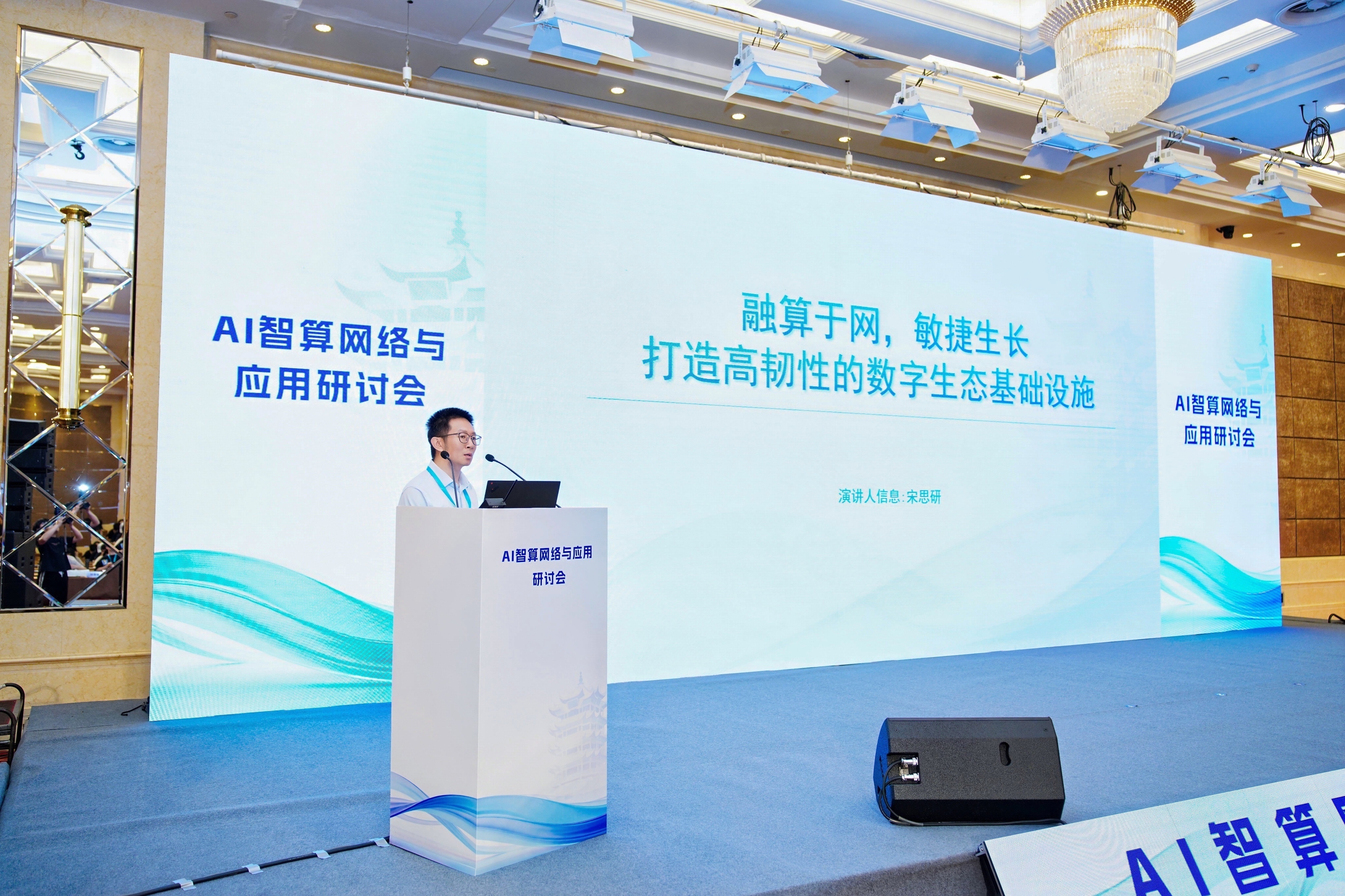
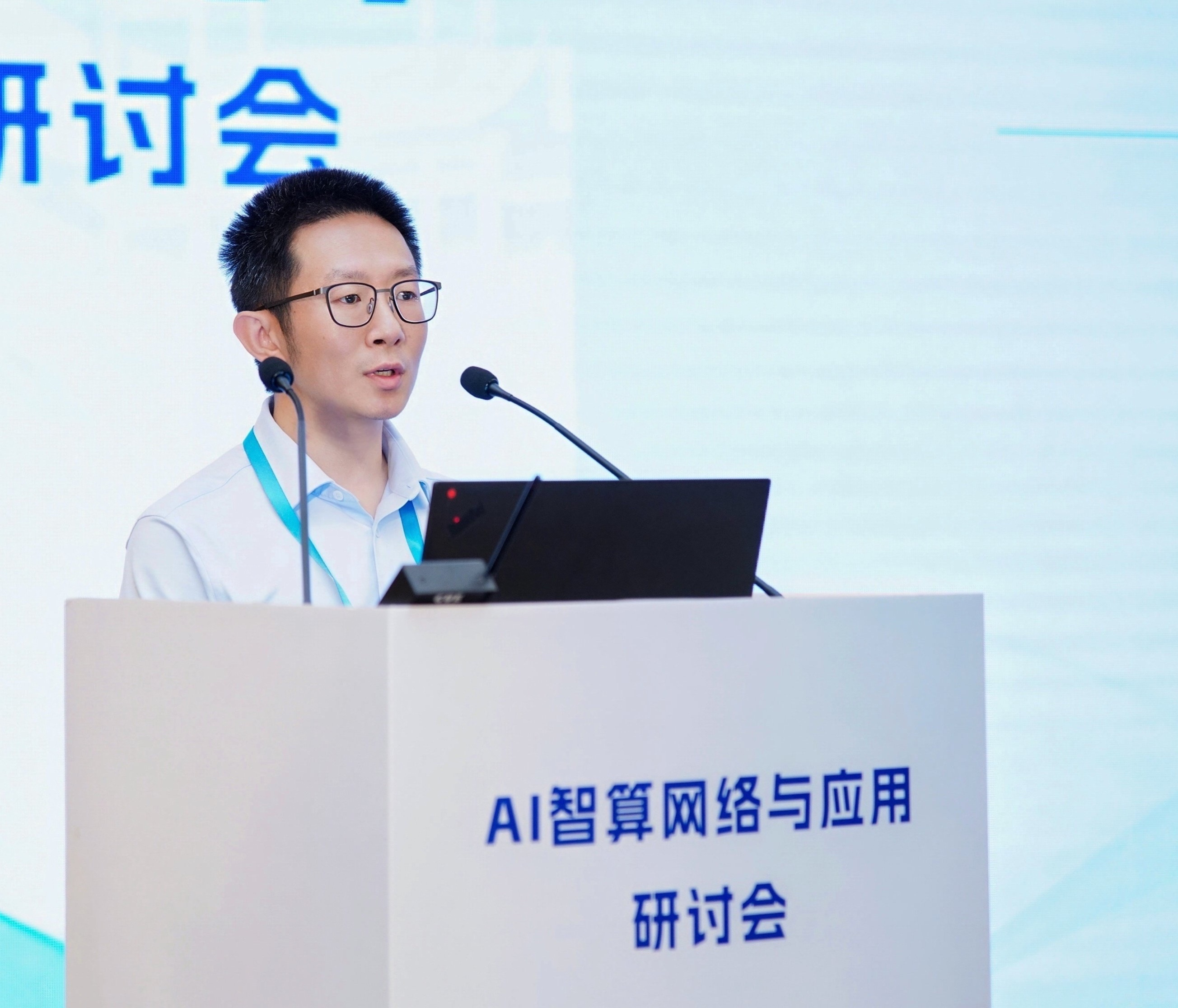
In an era where AI is reshaping everything, the resilience of digital infrastructure no longer simply means “zero downtime” — it signifies the capability for “agile growth.” On May 16, during the 2026 World Telecommunication and Information Society Day Conference, the 2026 Information and Communication Industry High-Quality Development Seminar was held concurrently. BodaData was invited to attend and delivered a keynote speech. Centered on the theme “Integrating Computing into the Network, Agile Growth — Building a Highly Resilient Digital Ecosystem Infrastructure,” Song Siyan, Product Director of the Connectivity Business Unit at BodaData, systematically elaborated on the structural challenges that data center enterprises face in the AI era, as well as BodaData’s strategic restructuring path centered on “Full-Stack Operations.” With over two decades of industry experience, this enterprise — accelerating its transition from a traditional IDC provider to an AI computing infrastructure service provider — is steadfastly injecting new meaning into the “digital lifeline.”
Breaking the “Impossible Trinity”: From the Burden of Heavy Assets to Full-Stack Resilience
The explosion of AI has turned computing power into a new factor of production, but it has also plunged the traditional data center model into unprecedented dilemmas. The industry is now confronting an “Impossible Trinity”: accelerated technology iteration causing rapid asset depreciation, compressed delivery cycles coupled with insufficient large-scale customization capabilities, and a structural imbalance in cost structures driven by high power consumption and energy efficiency challenges.
At the same time, the requirements for network systems in the AI era are undergoing fundamental changes. Song Siyan observed that traditional networks mainly serve human-machine interaction, are dominated by “North-South” traffic, emphasize connectivity, stability, and cost efficiency, and typically adopt hierarchical architectures with “best-effort” transmission. However, with the rapid growth of scenarios such as large model training and distributed inference, the network core is shifting toward high-frequency “East-West” communication among GPUs, imposing higher demands for 400G/800G ultra-high bandwidth, microsecond-level low latency, zero packet loss, and deterministic transmission. The network architecture is also accelerating its evolution from the traditional three-tier tree topology to flat, lossless architectures such as Leaf-Spine, while the operation and maintenance (O&M) logic is moving from manual static configuration toward AI-driven intelligent scheduling, seconds-level fault self-healing, and deterministic SLA guarantees. It is widely recognized in the industry that the network is no longer just a data transmission channel, but is becoming the core infrastructure that determines AI computing efficiency and model training effectiveness, driving industry competition to upgrade from “racks + bandwidth” to a comprehensive capability competition encompassing “computing + network + scheduling + energy consumption.”
Phenomena indicate that GPU chips are iterating at an ever-faster pace. Tech giants frequently demand the “delivery of a 10,000-card cluster within six months,” a timeline that the traditional design-construction-acceptance process simply cannot match. Meanwhile, although electricity prices vary significantly across regions, what truly determines TCO is the power efficiency per unit of computing power. Taking the MoE (Mixture of Experts) architecture and efficient inference as examples, algorithm optimization can notably reduce the per-token inference energy consumption and the overall computing cost; in some scenarios, the share of energy cost can even drop by an order of magnitude. This means that hardware, algorithms, and infrastructure must co-evolve.
Faced with this dilemma, BodaData did not choose blind expansion. Instead, it returned to the essence of operations and proposed a “Full-Stack Operations” model — a complete closed loop covering investment, construction, retrofitting, and operations. This model redefines the resilience of digital infrastructure: resilience is no longer static redundancy, but dynamic adaptability.
According to reports, BodaData is reshaping the form of intelligent computing centers with a “flexible foundation” philosophy, offering three differentiated service models: deeply customized full-building or single-floor intelligent computing centers tailored for hyperscalers to meet the rigorous demands of ultra-large-scale computing clusters; flexible micro-module leasing and colocation services for growth-stage enterprises, supporting rapid “building-block” deployment; and one-stop full-lifecycle solutions covering “investment, construction, operation, and retrofitting,” eliminating the fragmented management pain points of the traditional model.
Building Global Computing-Network Synergy: From Single-Point Computing Power to an Ecosystem Value Loop
If full-stack operations represent BodaData’s “internal strength” in addressing current challenges, then global computing-network synergy and an ecosystem value loop are its “external expansion” aimed at the future. BodaData has built differentiated capabilities in computing power scheduling, network interconnection, security compliance, and vertical industry penetration.
To date, BodaData has deployed 15 computing hubs across China and in countries and regions including the Philippines. More than just computing centers, BodaData strives to become a globally accessible computing power scheduling hub. Through heterogeneous hybrid cloud integration, cloud direct connects, overseas acceleration, and end-to-end networking services, BodaData seeks to open up data arteries and achieve integrated access across IDCs, cloud computing platforms, and SaaS.
On the security and compliance front, BodaData has established a full-stack compliance system that encompasses adherence to China’s Multi-Level Protection Scheme (MLPS), commercial cryptography evaluation, and data sovereignty protection. The “moat” for enterprises going global includes not only technical capabilities but also a deep understanding of and proactive adaptation to global rules. Leveraging its comprehensive security compliance capabilities and global operational experience, BodaData is continuously providing a trusted and stable digital infrastructure foundation for enterprise deployments.
The endgame of AI infrastructure lies in the competition over ecosystem collaboration and value loop capabilities. From IDC to AIDC, from a resource provider to a capability integrator, BodaData is seeking a new growth curve through a profound self-reconstruction. In an era when the “digital lifeline” requires higher resilience, BodaData will use full-stack operations as its anchor, the global computing-network as its pulse, and security compliance as its shield to write a new paradigm for digital ecosystem infrastructure.
推荐资讯
more- 知名证券公司入驻前海一号智算基地,博大数据助力擎画湾区金融新蓝图
- 直击WAIC 2026:当大模型狂飙,博大数据如何扎稳“算力底座”?
- 亚洲数据中心峰会:面向AI时代基础设施变革,博大数据李亚提出算力能源协同新思考
- 博大数据入选第三方算力中心服务商综合能力TOP10,综合实力获行业认可
- 打通电力与算力的价值链路,博大数据荣获“年度AI基础设施创新奖”
- 绿茵赛场,算力奔腾!博大数据助力“蒙超”,为“Token之都”注入低碳动能
- 融算于网,敏捷生长——博大数据打造高韧性的数字生态基础设施
- 博大数据荣膺“全球AI生态基石大奖”,夯实融合算力基础设施服务商领先地位
- 三载筑基,万里可期!博大数据品牌焕新三周年,以融合之力作答时代之问
- 以“五维筑基·全栈赋能”构筑算力基建新高地,博大数据亮相AIDC 2026第三届AI算力产业大会