
Building a New High Ground for Computing Infrastructure with "Five-Dimensional Foundation Building · Full-Stack Empowerment" — BodaData Showcases at AIDC 2026 3rd AI Computing Power Industry Conference
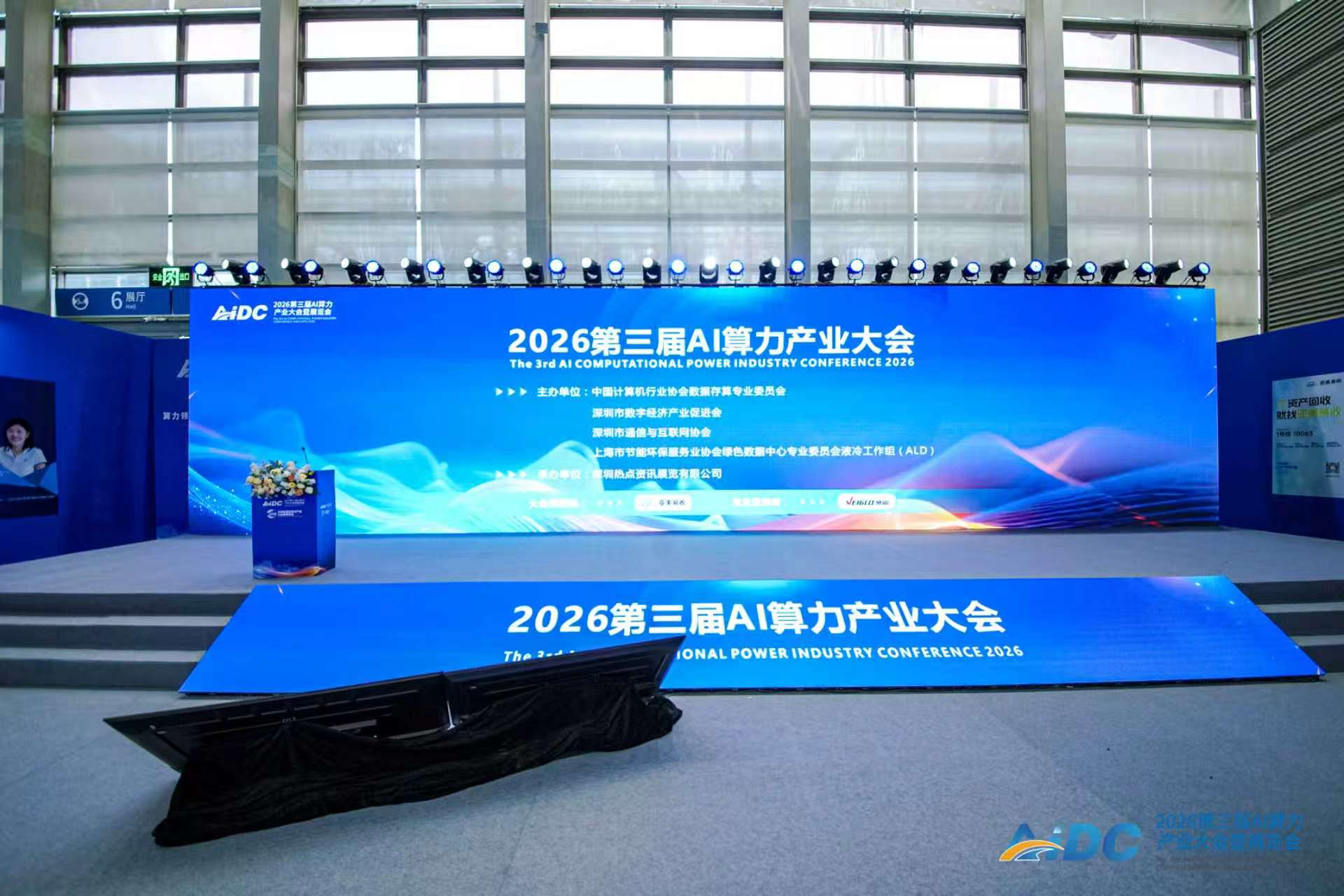
From April 9 to 11, 2026, the AIDC 2026 3rd AI Computing Power Industry Conference and Exhibition was held at the Shenzhen Futian Convention and Exhibition Center. The conference was jointly organized by the Shenzhen Digital Economy Industry Promotion Association, the Data Storage and Computing Committee of the China Computer Industry Association, and the Liquid Cooling Working Group (ALD) of the Green Data Center Committee under the Shanghai Energy Conservation and Environmental Protection Service Industry Association. The event featured a main forum, specialized sub-forums, exhibitions, and industry matchmaking sessions, covering the entire AI computing power industry chain.
Five-Dimensional Foundation Building: Coordinating Energy, Chips, Infrastructure, Models, and Applications to Address Core Challenges in the Era of Intelligent Computing
At the main forum on the morning of April 9, Steve Gao, Vice President of BodaData, delivered a keynote speech titled "Five-Dimensional Foundation Building · Full-Stack Empowerment — BodaData's Path to Computing Infrastructure." He systematically outlined BodaData's strategy and practices for computing infrastructure in the AI era, drawing widespread attention from attendees.
Steve Gao pointed out in his speech that the rapid evolution of artificial intelligence has placed unprecedented demands on computing infrastructure. Chip power consumption is growing exponentially, air cooling is approaching its physical limits, and PUE requirements are becoming increasingly stringent. High-end GPUs remain dependent on imports with ongoing supply cut risks, while traditional architectures struggle to meet the demands of high bandwidth and low latency. Training costs are extremely high, and application scenarios remain fragmented. These issues intertwine, necessitating a fundamental, systematic reconstruction of computing infrastructure from the ground up. Based on this assessment, BodaData proposed the "Five-Dimensional Foundation Building" framework, which coordinates efforts across five dimensions: energy, chips, infrastructure, models, and applications.
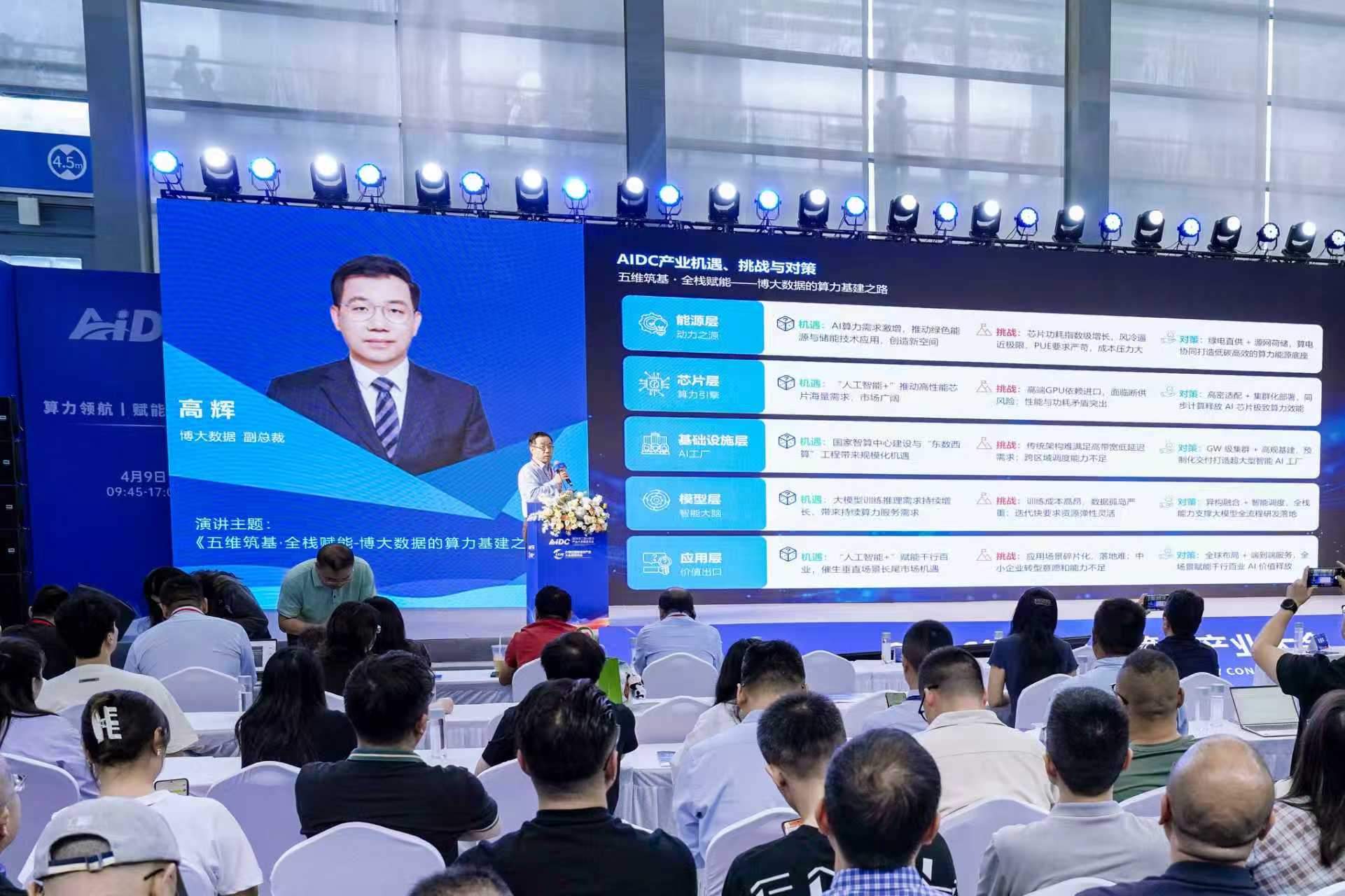
At the energy layer, the company adopts a strategy combining direct green power supply with the integration of source, grid, load, and storage, promoting synergy between computing and energy. Data indicates that for a 500MW AI data center, a reduction in PUE of just 0.1 can save approximately 200 million RMB in annual electricity costs. At the chip layer, high-density adaptation and clustered deployment fully unlock the performance of AI chips. At the infrastructure layer, GW-level clusters and high-standard infrastructure are employed, utilizing prefabricated delivery to construct ultra-large-scale AI factories. At the model layer, full-stack capabilities of heterogeneous integration and intelligent scheduling are provided to support the R&D and deployment of large-scale models. At the application layer, global deployment and end-to-end services empower industries to unlock the value of AI.
Steve Gao particularly emphasized a critical shift: The value of AI equipment has surged from $5,000 for a general-purpose server to $200,000 for an AI server—an increase of approximately 40 times. Moreover, up to 67% of data center failures are attributed to power supply (54%) and cooling systems (13%), underscoring that safety and reliability are the most critical requirements for AI data centers.
Full-Stack Empowerment: Anchoring AI Data Center Capabilities with Global Best Practices to Drive Computing Infrastructure Deployment
Facing these challenges, optimization in a single dimension is no longer sufficient. To this end, BodaData presented a comprehensive AIDC Capability Framework, covering five core capabilities: high-standard forward-looking planning, systematic optimization of data metrics, rapid prefabricated delivery, safe, efficient, green, and low-carbon operations, and AI-driven intelligent operations. In large-scale facility planning, a single-building, single-module design is adopted to achieve high load-bearing capacity, high ceiling height, and high flexibility and adaptability. In terms of delivery models, engineering and productization proceed in parallel, with modular prefabrication ensuring that compute-ready modular units, power distribution units, and cooling stations are factory-tested for rapid deployment.
In the realm of green and low-carbon operations, BodaData implements an integrated air–liquid cooling architecture and liquid cooling-enabled high-density solutions, complemented by high-efficiency dual-coil cooling and waste heat recovery. Steve Gao noted that single-rack power density is rising rapidly: 20-30 kW represents the transitional range between air and liquid cooling, and beyond 30 kW, the heat exchange capacity of air cooling becomes inadequate to handle the thermal load of high-power components. Leveraging AI-driven intelligent operations, BodaData has built an intelligent operations management platform centered on AI + DCIM, capable of modeling power loads, temperatures, and cooling parameters to achieve optimal overall energy efficiency.
In terms of specific projects, BodaData showcased benchmark cases including the Shenzhen Qianhai AI data center, Hebei Langfang AI data center, Inner Mongolia Ulanqab Intelligent Computing Base, and the Philippines Converged AI data center. These examples fully demonstrate its full-stack delivery capabilities and global deployment strength in the planning, construction, and operation of ultra-large-scale AI data centers.
As a leading integrated computing infrastructure service provider, BodaData's core team possesses over 20 years of industry experience. The company has deployed ultra-large-scale clusters across China, anchored in Beijing, Langfang, Shanghai, Guangzhou, Shenzhen, Chengdu, Wuhan, and Ulanqab, covering a total area of over 320,000 square meters and housing over 100,000 cabinets. The company focuses on providing end-to-end services for large-scale enterprise clients, offering GPU computing power services and scheduling for AI and high-performance computing scenarios.
During the conference, BodaData also participated in the "AI Computing Power+" Action Ecosystem Partner Award Ceremony. Looking ahead, as the "AI+" initiative advances, computing infrastructure will solidify its role as the core foundation of the digital economy. BodaData reaffirmed its commitment to the "Five-Dimensional Foundation Building · Full-Stack Empowerment" strategic path, collaborating closely with upstream and downstream partners to drive the evolution of computing power from a resource into a service. The goal is to provide solid, green, and efficient computing power support for the intelligent transformation of all industries, thereby contributing to the high-quality development of China's digital economy.
推荐资讯
more- 知名证券公司入驻前海一号智算基地,博大数据助力擎画湾区金融新蓝图
- 直击WAIC 2026:当大模型狂飙,博大数据如何扎稳“算力底座”?
- 亚洲数据中心峰会:面向AI时代基础设施变革,博大数据李亚提出算力能源协同新思考
- 博大数据入选第三方算力中心服务商综合能力TOP10,综合实力获行业认可
- 打通电力与算力的价值链路,博大数据荣获“年度AI基础设施创新奖”
- 绿茵赛场,算力奔腾!博大数据助力“蒙超”,为“Token之都”注入低碳动能
- 融算于网,敏捷生长——博大数据打造高韧性的数字生态基础设施
- 博大数据荣膺“全球AI生态基石大奖”,夯实融合算力基础设施服务商领先地位
- 三载筑基,万里可期!博大数据品牌焕新三周年,以融合之力作答时代之问
- 以“五维筑基·全栈赋能”构筑算力基建新高地,博大数据亮相AIDC 2026第三届AI算力产业大会